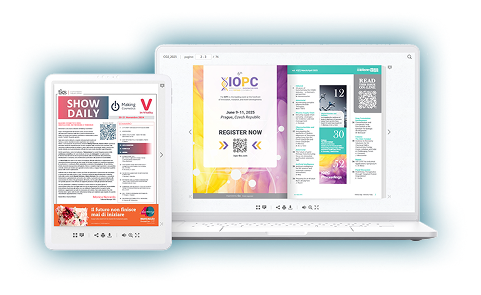


The 6th edition of the International Oligonucleotides and Peptides Conference (IOPC) was held in Prague, Czech Republic, from June 9–11, 2025, bringing together researchers, industry leaders, and innovators at the forefront of oligonucleotide and peptide science. Organized by Tks Publisher, the event showcased the dynamic evolution of these fields, spanning from new synthetic methods and delivery strategies to sustainability, scale-up, and regulatory readiness.
A Moment of Tribute: Lifetime Excellence in Peptide Science Award

This year’s IOPC opened with a moving and significant ceremony: the Lifetime Excellence in Peptide Science Award was presented to Professor Fernando Albericio, honoring a remarkable career dedicated to advancing peptide chemistry.
In a heartfelt tribute, the organizers recognized Professor Albericio’s contributions that span nearly five decades, from his foundational research on solid-phase peptide synthesis (SPPS) to his pioneering work in sustainable chemistry, therapeutic peptides, and drug delivery systems. A prolific author and dedicated mentor, he has guided more than 75 Ph.D. students and helped shape the field globally. The recognition also highlighted his instrumental role in founding the IOPC, and his long-standing collaboration with Chemistry Today journal.
Following the award, Professor Albericio delivered a Lectio Magistralis on SPPS, reflecting on the integration of resins, protecting groups, and coupling reagents in optimal solvents—an emblematic synthesis of his scientific journey.
OLIGONUCLEOTIDES: EMERGING MODALITIES AND SUSTAINABLE INNOVATION
New Frontiers in RNA Therapeutics
The oligonucleotide session launched with Dr. Sudhir Agrawal (Arnay Sciences), who offered a panoramic view of RNA therapeutics over three decades—highlighting evolving chemistries, delivery platforms, and clinical applications. This was followed the day after by a keynote from MiNA Therapeutics, showcasing the clinical promise of RNA activation (RNAa), a novel mechanism to upregulate gene expression using small activating RNAs.
Process Development and Digital Tools
A consistent theme throughout the session was the drive toward faster, smarter development:
- CPI demonstrated how machine learning accelerates optimization of SPOS processes.
- AstraZeneca presented its internal capacity-building initiative to support early oligonucleotide development, emphasizing autonomy and technical robustness.
- ST Pharm and Thermo Fisher addressed impurity profiling and the need for tighter specifications, ensuring safety and compliance.
Advanced Technologies for Scalable Synthesis
Sustainability and scalability dominated the mid-session talks:
- Ajinomoto, Allozymes, and Hongene Biotech unveiled chemoenzymatic and hybrid synthesis platforms, combining enzymatic ligation with liquid-phase synthesis, a direction poised to reduce waste and cost.
- Exactmer introduced its Nanostar Sieving system, allowing synthesis without solid supports or halogenated solvents, ideal for large-scale and environmentally conscious manufacturing.
Novel Backbones, Conjugation, and Delivery
Key advancements in oligonucleotide conjugation and targeting were also highlighted:
- University of Southampton explored neutral backbones to enhance gymnotic delivery.
- XNA Pharma introduced a peptide-siRNA prodrug for tumor-specific RNAi activation.
- Liid Pharmaceuticals’ platform and University of Oxford’s conjugation chemistry illustrated next-gen solutions for intracellular delivery.
- Axolabs, Novartis, and Dupont addressed bifunctional linkers, CMC challenges, and purification technologies that are becoming essential for conjugated oligos.
PEPTIDES: FROM GREEN MANUFACTURING TO COSMETIC APPLICATIONS
The peptide-focused sessions mirrored the oligo track in their emphasis on process intensification, green chemistry, and functional versatility.
Manufacturing for the Future
Talks from Fresenius Kabi, CSBio, Chugai, and Polypeptide Group introduced solvent-reducing synthesis strategies, process intensification technologies, and scale-up methods designed for mid- to large-size peptides.
Of note:
- CSBio’s platform achieves high purity with reduced solvent.
- Fresenius Kabi emphasized side chain unprotected amino acid strategies.
- CPC Scientific outlined PFAS-free manufacturing of peptide APIs and peptide–oligonucleotide conjugates.
- EUROAPI proposed a green solvent alternative to DMF in SPPS, improving both purity and sustainability.
- CEM Corporation presented advances in microwave-assisted peptide synthesis and ethanol-based purification workflows, reducing process mass intensity and eliminating acetonitrile use.
- Gyros Protein Technologies presented automation strategies to accelerate GLP-1 peptide synthesis workflows, enabling scalable and eco-conscious peptide production.
- Advion Interchim Scientific highlighted integrated mass spectrometry tools tailored for fast peptide and oligo analysis, addressing the growing need for real-time quality control in both R&D and manufacturing environments.

Beauty and Biotech: Peptides in Cosmetics
Innovations in cosmetic peptides received growing attention:
- Croda Beauty Actives introduced GAP-PS, a next-gen peptide design and delivery technology.
- Core Biogenesis and Lucas Meyer Cosmetics focused on oleosome delivery systems and AI-designed multifunctional peptides with applications in neurocosmetics and skin aging.
These presentations reflected the growing intersection of peptide science with personal care and wellness, and the field’s embrace of AI tools.
Macrocycles, Peptidomimetics, and Therapeutics
Cutting-edge research in macrocyclic peptides, PROTACs, and bifunctional peptidomimetics was featured in talks by Keltic Pharma Therapeutics, University of Tokyo, Hotha’s Life Sciences and University of Milan, demonstrating new directions in chemical biology and targeted therapies.
The final peptide sessions tackled oral delivery challenges, GLP-1 analogues, and drug-drug interactions, affirming peptides’ critical role in metabolic and endocrine therapies.
- ProteinQure introduced PQ203, a novel peptide-drug conjugate targeting the SORT1 receptor in solid tumors, offering rapid clearance from plasma while maintaining high tumor localization and activity.
• IOCB Prague explored insulin and IGF analogs to dissect receptor-specific signaling pathways, providing insight into hormone-receptor interactions and potential new therapeutic directions.
CROSS-FIELD THEMES: DIGITALIZATION, REGULATORY PREPAREDNESS, AND GREEN CHEMISTRY
Several cross-cutting themes united the oligonucleotide and peptide communities:
- Digitalization and AI: AI-enabled platforms are accelerating development, improving prediction, and supporting CMC planning.
- Regulatory clarity: Talks from Quralis, Carmody Quality Solutions, and academic collaborators emphasized the need to align development with emerging regulatory expectations, particularly in impurity control, conjugate analysis, and diastereomer management.
- Sustainability: From enzymatic synthesis and green solvents to PFAS-free reagents, sustainability was not just a topic but a design principle across the sessions.
- Celerion addressed pharmacokinetic interactions between GLP-1 receptor agonists and orally administered drugs, stressing the regulatory need for gastric emptying interaction studies.
Recognition
A dedicated Best Award Session celebrated outstanding scientific contributions.
The Best Peptide Track Award was granted to Kaliroi Peqini (Department of Pharmaceutical Science, University of Milan) for her presentation “IsdB/hemoglobin at the interface: a key interaction in the development of hemoglobin scavenging peptides”. Her work was recognized for its innovative approach to targeting bacterial iron acquisition mechanisms—offering a promising therapeutic angle for infectious disease intervention using peptide-based strategies.

The Best Oligonucleotide Track Award went to Zeynep Kanlidere (Acibadem University, Istanbul), who presented “Preparation of DNA-based hybrid biocatalysts from chemically modified oligonucleotides and their application in enantioselective asymmetric reactions”. The jury praised this contribution for its originality in bridging oligonucleotide chemistry with asymmetric catalysis, opening new avenues in DNA-based green catalysis beyond therapeutic applications.
These recognitions highlighted the conference’s commitment to fostering innovative, interdisciplinary science and encouraging young investigators shaping the future of the field.
Conclusion
IOPC 2025 reaffirmed its standing as the leading European forum for oligonucleotide and peptide innovation with over 40 oral presentations, multiple parallel sessions, and a vibrant poster exhibition, From foundational chemistry to advanced therapeutics, from green manufacturing to AI-driven optimization, the conference served as a vital platform for interdisciplinary exchange and future-forward collaboration.
In honoring Professor Fernando Albericio and spotlighting the transformative work of dozens of scientists and companies, IOPC once again proved its central role in driving the evolution of peptide and oligonucleotide science—toward smarter, safer, and more sustainable medicines.
Gayle De Maria M.SC.
Senior Editorial Manager
Tks Publisher