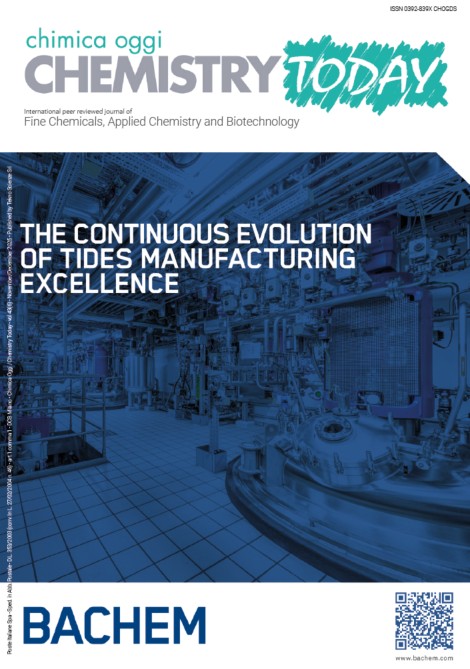

Batch reactors (Figure 1) are stirred vessels used in the process industries for mixing, synthesis, and separation. Most have external jackets for heating and cooling. At the industrial scale, they typically have volumetric capacities of between one and ten cubic metres. Their value lies in the ability to process thousands of litres in a day for a broad range of applications. Despite these benefits, large vessels have significant limitations. To compensate for the low heat transfer area per unit volume, measures such as increased dilution, reduced operating temperatures, and semi batch addition are common practice. These prolong the process cycle and increase contact between reactants and product. Slow cooling leaves materials exposed to elevated temperatures for long periods after the reaction is complete. Mixing times (1) are poor and shear is localised. These factors variously impact yield and quality. A typical batch cycle involves inertion, filling, heating, addition, cooling, discharge, and cleaning. These activities reduce productive capacity to a value in the region of 100 litres per hour per cubic metre of reactor volume. The number falls with increasing reactor size.
Login now to read the full article
Don’t have an account yet? Subscribe now, it’s free!
Lorem ipsum dolor sit amet, consectetur adipiscing elit, sed do eiusmod tempor incididunt.

All pubblications
archive from 2022 to today

All articles
PDF Version

Receive our latest issue alerts
directly to your mailbox